Few things say welcome at a British front door quite like a well-judged lantern. Not the brightest one on the street, and certainly not the floodlight that turns the front garden into a crime scene. Something warmer and quieter: enough light to find the keyhole with two bags of shopping, enough glow to make the brickwork look handsome, not so much that the neighbours can read by it. Choosing well rarely comes down to price. It comes down to size, material, bulb warmth and placement — roughly in that order.
Start with the door, not the lantern
Lanterns look best when they serve the doorway rather than shout over it. Before you buy anything, stand on the pavement after dark and look at your house. Note the width of the door, how much wall sits either side of it, whether a porch roof or fanlight already offers shelter, and how far the door swings outwards. That last point catches people out: a chunky lantern mounted too close to the frame will meet the door every time it opens.
A single lantern centred above the door suits narrow terraces and most modern front doors. Where there is generous wall either side — a Victorian semi, a double-fronted house, a porch with pillars — a pair flanking the door spreads light more evenly and looks more deliberate than one large fitting straining to do all the work.
Proportion matters more than precise dimensions. Hold a cardboard cut-out the size of the lantern at the intended spot and walk back to the gate. If it looks like a hat on a pin, go bigger. If it makes the door look small and apologetic, go smaller. As a rough rule, the lantern should sit comfortably within the wall section it occupies, with breathing space above and beside it.
Materials that survive a British winter
Outdoor fittings live a hard life: driving rain, frost, salt air, spiders. The finish does the work, so look closely at how the lantern is made rather than how it photographs online.
- Solid brass — ages gracefully, particularly by the coast, and can be lacquered or left to patinate. Heavier and pricier, but it lasts decades.
- Copper — develops a soft verdigris over time. Beautiful on period houses; less so if you wanted it to stay shiny.
- Cast aluminium with a proper powder coat — the sensible middle ground. Thick metal, thick coating, no rust through.
- 316 marine-grade stainless steel — worth the premium for exposed coastal walls.
- Thin pressed steel with a sprayed "antique" finish — the one to avoid. It pits, flakes and looks tired within a couple of seasons.
Check the IP rating, which tells you how well the fitting keeps water out. IP44 is the sensible minimum for a sheltered porch; go for IP54 or IP65 where the lantern takes the full force of the weather. Confirm the rating covers the whole fitting, not just the glass, and that the cable enters through a sealed grommet rather than a bare hole. A small drain hole at the bottom of the lantern body is a good sign — without one, condensation collects inside and corrodes the lamp holder.
Match the lantern to the age of the house
A house and its lighting should look like they belong together. Victorian and Edwardian fronts carry six-sided lanterns in brass or matt black, often on a scroll bracket. Georgian houses suit something squarer and quieter. Thirties semis take a simple black metal design without fuss. New builds look best with powder-coated anthracite and clean, geometric shapes. Forcing a mock-Tudor lantern onto a contemporary render wall reads as fancy dress, however good the lantern is on its own.
It is also worth glancing along the street. If every neighbour has black wrought-iron style fittings, a polished brass pair will either look charmingly individual or slightly out of step. Neither is wrong; just decide deliberately.
Bulb warmth: the difference between welcome and waiting room
This is where most porch lighting goes wrong. The lantern is often fine; the bulb is clinical. Look for warm white, somewhere between 2200K and 2700K. Anything at 4000K and above reads as institutional, and it flattens red brick and stone into grey.
Think in lumens rather than watts. A porch lantern does not need much: a few hundred lumens per fitting is usually plenty to light a path, a step and a house number. Reserve the bright stuff for the security light at the back. A dimmable, filament-style LED gives the soft, familiar glow of an old bulb while using very little power, and a frosted or lightly seeded glass panels softens the glare so you are not squinting at your own front door.
Placement, height and the shadow problem
Get the height right and everything else falls into place. As a general guide, the centre of a lantern beside a door sits roughly 1.65m to 1.75m above ground level — high enough to clear heads, low enough to wash light across the path. Pull it 15cm to 20cm out from the door frame so the beam falls on the wall and step rather than straight into your eyes. Under a covered porch, a ceiling-mounted lantern or a pair of smaller fittings often works better than wall lights.
Test before you drill:
- At dusk, have someone hold the lantern in position while you stand at the gate and then at the doorstep.
- Check the light lands where you need it — on the keyhole, the step edge, the house number — not in your face.
- Swing the door fully open and closed to confirm clearance.
- Look back from the pavement, and from an angle a neighbour might see, to check for glare into windows.
Switches, sensors and looking after it
A simple switch inside the hall is the most useful thing you can add, and a dusk-to-dawn photocell or a timer handles the evenings when you are late home. Motion sensors are handy on a side path, though a PIR that clicks on for every passing cat soon becomes tiresome. Smart bulbs let you set schedules without touching the wiring.
Maintenance is minimal but not zero. Rinse brass and copper with warm soapy water, dry it, and apply a little wax; skip abrasive cleaners. Each autumn, clear any debris from the drain holes, check the gaskets and glass for cracks, and make sure the fixing screws are stainless so they still turn in five years' time. By the coast, a quick rinse every few weeks keeps salt from eating the finish.
Any new outdoor circuit, or work inside the consumer unit, is a job for a registered electrician, and some work may need notifying under building regulations. If you are unsure, ask before you start.
Before you buy
Measure the wall and the door swing, decide on one lantern or two, and pick a material that suits both the house and the weather it faces. Then choose warm white light and mount it slightly lower and further from the door than your first instinct suggests. Do those things and the lantern will quietly do its job for years: a small pool of light on a wet pavement, a door that looks pleased to see you, and a front garden that says someone lives here who pays attention.
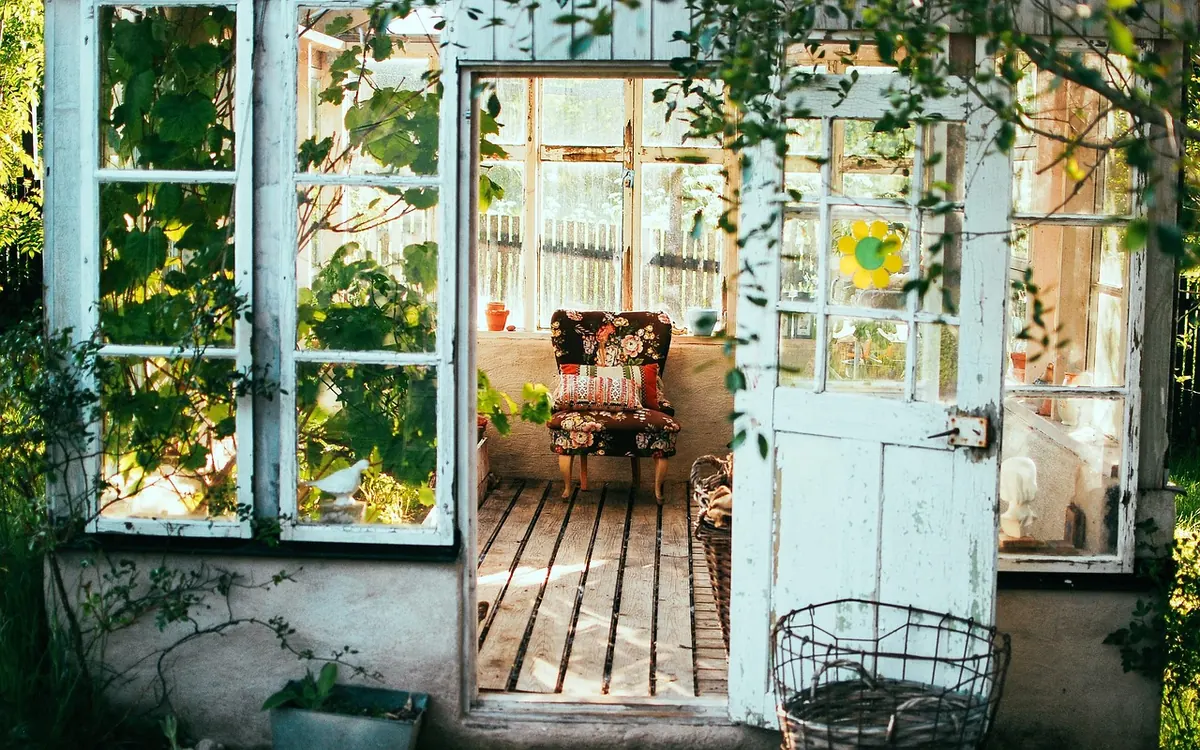
Photo: Sergey Platonov / Pexels