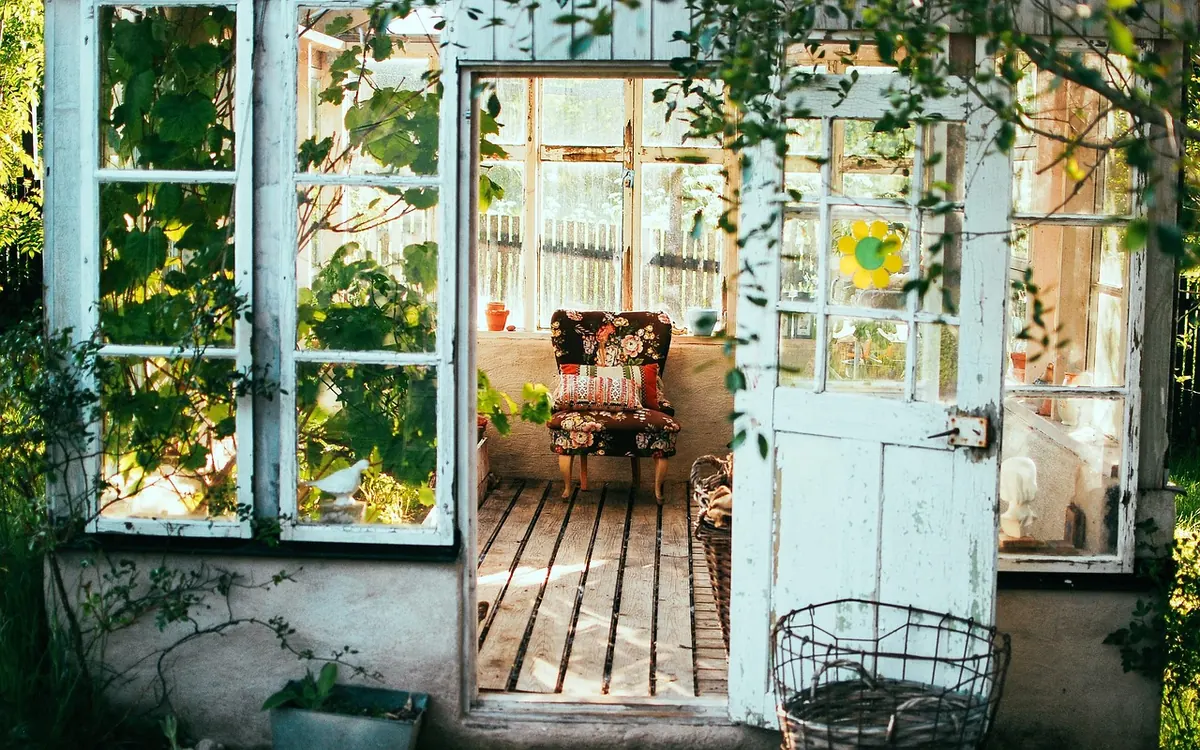
Every house has a corner that does nothing much. The gap beside the chimney breast, the awkward strip between the window and the bookcase, the space at the end of the landing that only ever collects a laundry basket. Those corners are opportunities. Add a chair, a lamp and a blanket and they become the best seat in the house.
Hygge, the Danish habit of making comfort deliberate, and British snugness are close cousins. Both are about low light, wool, warm drinks and the sense that nothing needs to happen for the next hour. Building a nook is less about shopping and more about arranging what you have with a bit of intention.
Choose the Corner Before You Buy Anything
Measure first. A reading chair wants roughly a metre of clear space on its open side, and a little more if you plan to put your feet up. Sit on the floor in the spot you have in mind and look around from that height. What you notice from down there is what you will notice every evening.
Check for the things that quietly ruin a reading corner: a radiator that roasts your ankles, a draught under a door, a socket too far away for a lamp, a spot directly in the path between the kitchen and the stairs. A corner you have to apologise for is not a corner you will use. If you rent and want to put up a shelf, check your tenancy agreement first.
The Chair Matters More Than the Decor
Everything else in the nook can be improvised. The chair cannot. Sit in a candidate for at least half an hour before committing, ideally with a book in your hands, because a chair that feels generous for five minutes can be a misery by chapter three.
What to look for: a back that supports your shoulders rather than pushing them forward, arms low enough that your elbows do not float, and a seat shallow enough that your feet reach the floor. If you are fighting a draught, a high-backed wing chair earns its keep. In a tight corner, a small slipper chair with a cushion at the small of your back works better than something oversized.
Simple fixes for an almost-comfortable chair
- A firm cushion behind the lower back changes the angle of everything.
- A folded throw over the back adds padding and looks better than it sounds.
- A firm footstool lets you sit back properly instead of perching.
- A chair pad under the seat cushions adds a surprising amount of staying power.
Light It in Layers, Not Floodlights
Overhead lighting flattens a room and makes a corner feel like a waiting area. Aim for three small pools of light at different heights instead. A floor lamp behind and slightly to the side of the chair, a table lamp at elbow height, and a candle or two if you like them. Warm white bulbs suit the mood; cool white ones undo all your work.
Position matters as much as brightness. Light should fall over your shoulder onto the page, not into your eyes. If you read on a screen in the evening, keep the lamp behind you and lower the brightness so the screen is not the brightest thing in the room. A dimmer switch or a plug-in dimmer is a small upgrade that makes an evening feel like an evening. Never leave candles burning unattended, and keep them clear of throws.
Blankets, Throws and the Business of Being Warm
Hygge is not a spending competition. One good wool blanket beats five thin ones, and a blanket you have owned for years beats one bought last weekend. Lambswool, merino, a Welsh tapestry blanket or a tartan throw all do the job. In winter, a sheepskin over the seat of the chair is the single most effective addition you can make.
Keep a basket or an old wooden crate beside the chair so blankets have somewhere to live. Add a hot water bottle for cold evenings and a pair of thick socks within reach. The point is not to heat the whole house; it is to make one small area so comfortable that you do not want to leave it.
Keep Books Within Arm's Reach
A reading nook fails when you have to get up for the book. A small side table with a lower shelf, a wall-mounted shelf at elbow height, or tidy floor stacks all work. Rotate what is on display: the book you are halfway through, a poetry collection, one reference you dip into, and a couple you mean to reread.
Leave a notebook and pen on the table. If you drink tea while you read, a coaster and a small tray save the wood and the upholstery. Resist the urge to store sixty books in the corner; six to ten is a working library and looks better than a wall of spines.
Quietly British Touches
This is where the nook stops looking like a furniture catalogue and starts looking like yours. Choose two or three rather than all of them.
- A checked or tartan wool throw, folded over the chair arm.
- A proper china mug for tea, or a thick-walled pot if you prefer builder's strength.
- A small tea tray with a teapot, strainer and a biscuit tin, so nothing has to be carried in twice.
- A piece of brass — a candlestick, a small dish, a paperweight.
- A framed print: a botanical study, a bit of coastline, a map of a place you actually love.
- A small radio or record player for gentle background noise.
- Deep, warm paint on the walls behind you — olive, oxblood, a soft off-white, or a dark green that looks wonderful by lamplight.
Make It a Ritual, Not Just a Room
A corner only becomes a nook through use. Set a loose habit: twenty minutes after dinner, phone left in another room, tea on the tray, lamp on. Radio 4 or a record, or nothing at all. In summer, swap the wool for cotton, open the window and let the lamp do less work. In winter, add the hot water bottle and start reading earlier.
Put It Together in an Afternoon
You do not need a budget or a builder. Work through this in order and the nook will mostly build itself.
- Clear the corner properly, dust the skirting boards and check where the sockets are.
- Borrow a chair from another room and sit in it for an evening before spending money.
- Move the lamp in and test the light from a reading position, not standing up.
- Add the side table, the blanket basket and the coaster.
- Place one object that has nothing to do with style and everything to do with you.
Then sit down, put the kettle on and read for twenty minutes. If the light is wrong or the chair is a little too hard, adjust it this week rather than next. A reading corner is never finished, and that is rather the pleasure of it.
Photo: ThoughtCatalog / Pixabay