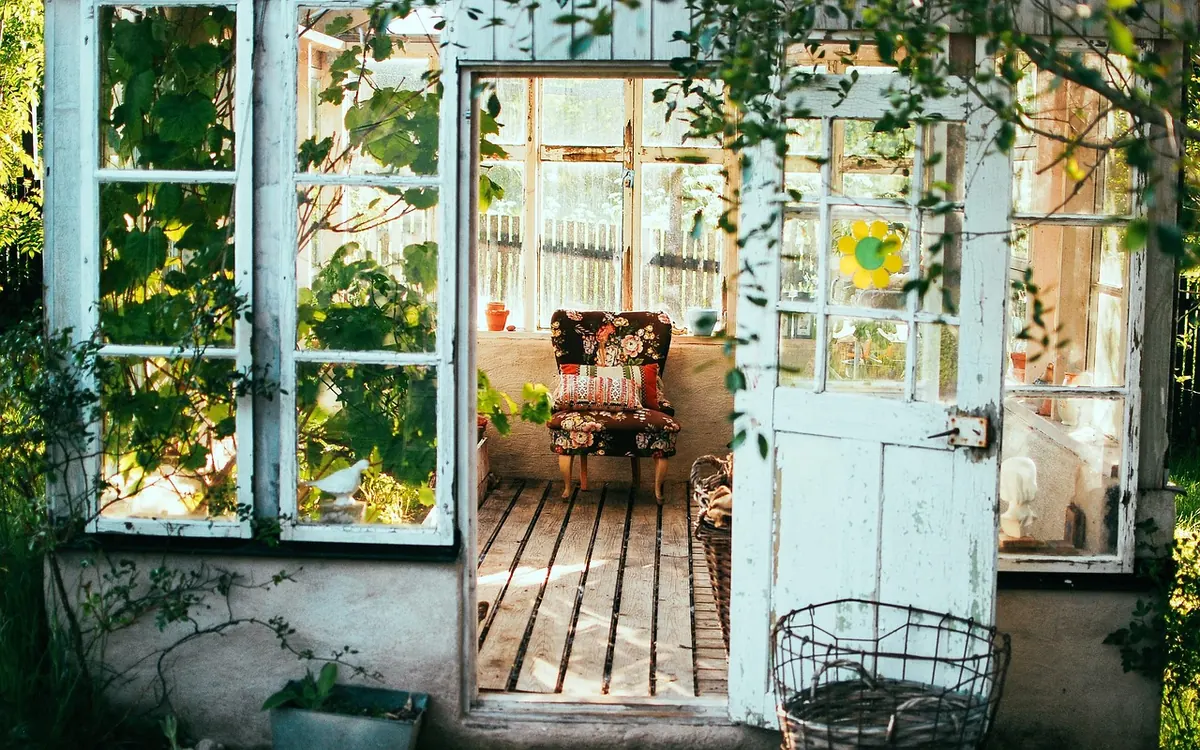
Cottage style and small rooms are not natural allies. The look is built on beams, deep windowsills, a dresser full of china and enough fabric to upholster a small chapel, and all of that wants space you may not have. The answer is not to shrink the style until it disappears, but to edit it: keep the warmth, the texture and the slightly worn edges, and let every piece in the room do more than one job. These seven ideas are the ones worth trying first in a box bedroom, a narrow front room, or a rented flat with good bones and no cupboards.
Paint the Shell in One Quiet Colour
Start with the walls before you buy a single cushion. Paint walls, ceiling and woodwork in tones from the same family: a soft off-white, a weak dove grey, a chalky stone, a pale sage. Two or three shades in the same register will read as one colour, and the room will feel larger without any cleverness involved.
What you are avoiding is contrast. Dark skirting against pale walls, or a white cornice under a coloured ceiling, draws horizontal bands across a small room and makes the ceiling feel lower than it is. If you have beams, paint them the same colour as the ceiling and they will quietly disappear, or leave them dark and accept that they will bring the ceiling down. Both are valid; choosing one and sticking to it is what matters.
Deep windowsills are a gift in an old cottage — a jug, a stack of paperbacks, a candle. Keep the sill clear of clutter and let it hold one or two things properly.
Move Storage Onto the Walls
Floor space is the scarcest thing you have, and a small room's walls are usually half empty. In a cottage this is also the most historically honest place to put things, so it looks right as well as working.
- A peg rail at shoulder height behind the door for coats, keys, dog leads and a tote bag.
- Two shallow open shelves above a doorway, for jars, small jugs and the china you actually use.
- A hook on the back of every door, screwed into the door rather than the frame if the frame is old.
- A slim corner shelf high up for a small lamp, so the light comes from two directions instead of one.
- A wall-mounted drop-leaf table in a hallway or alcove for keys, post, a laptop, or potting in spring.
Keep shelves shallow, around 15 to 18cm deep. Anything deeper becomes a ledge for things that never get moved again. Paint the brackets the same colour as the wall so the shelves look as though they grew there.
Choose Furniture That Does Two Jobs
Every piece in a small cottage room should earn its footprint twice over. A blanket box with a linen-covered lid works as a coffee table and holds bedding. A settle or hall bench with a lift-up seat gives you somewhere to pull boots off and somewhere to keep them. A window seat built over drawers turns dead space under glass into storage.
For tables, look at gateleg and drop-leaf designs, which fold to almost nothing against a wall, and at nesting tables that tuck away when you are not feeding anyone. A narrow chest of drawers with a mirror hung above it makes a dressing table, a desk and a bedside table in one. If you long for a dresser, hunt for a shallow one and treat it as wall storage rather than furniture you walk around.
Before you buy anything, measure the footprint and then measure it again with the thing opened out. A drop-leaf table needs clear floor on both sides when it is up. Masking tape on the floorboards is the cheapest way to test a layout you will have to live with for years.
Hang Mirrors Where They Earn Their Keep
A mirror is the oldest small-room trick there is, and it still works, provided you place it with intent rather than filling a gap. Hang one on the wall opposite a window and angle it slightly so it catches the sky. Put a smaller one behind a table lamp and the lamp appears twice, which lifts a dark corner without adding another light fitting.
Keep frames slim in a tight room; a heavy gilt frame is lovely in a hall and suffocating in a box bedroom. Old mirrors with lightly foxed glass are ideal, because they reflect soft light rather than a hard, bright copy of the room. One good mirror is enough. A wall of them starts to feel like a dance studio.
Scale Down the Patterns
Large blowsy chintz needs distance to read properly. On a short curtain, a two-seater sofa or a narrow bed, a big repeat turns into a blur of colour with no shape to it. Choose small prints instead: ditsy florals, tiny sprigs, fine ticking stripes, narrow checks, small-scale gingham.
Mixing prints without a fight
Stick to two or three patterns in one room and give them a colour in common. Vary the scale so they are not competing, and put a plain linen or cotton between them to give the eye a rest. A fine stripe, a small floral and a plain oatmeal weave will sit together happily. Let the biggest pattern have one home only — the blind, say — and keep everything else quieter than it.
On the floor, a jute or seagrass mat with a small patterned rug on top is more forgiving than a full carpet with a bold design. If your floorboards are decent, a runner beside the bed or a single small rug in the centre is plenty.
Layer Lightly, Then Edit
Textiles are where cottage style gets generous, and where small rooms get buried. One good wool throw and two cushions will do more for a sofa than six. Choose fabrics that improve with age and can be washed: linen, wool, cotton ticking, half-panelled curtains rather than heavy interlined ones.
Hang curtains as close to the ceiling as the window allows, and let them finish just below the sill or at the floor. A Roman blind is often the better answer in a small room, because it takes up no floor space and stacks neatly above the glass. Two lamps at different heights will always beat one central ceiling light, which flattens everything and makes corners look darker than they are.
Then edit. Walk in, look at the room as a stranger would, and take two things out. Small cottage rooms are not tidy rooms, but they are deliberate ones.
Where to Start in a Small Room
Do it in this order and you will not waste money.
- Empty the room as far as you can and paint the shell one quiet colour.
- Measure the floor and mark out candidate furniture with tape before buying.
- Put up the peg rail, hooks and one shelf above a doorway.
- Hang the mirror opposite the window and move a lamp to the darkest corner.
- Bring back only what does two jobs, and choose small patterns for anything upholstered.
Live with that arrangement for a fortnight before you buy anything else. Small rooms tell you quickly what is not working, and the answer is almost always less, placed better.
Photo: Pexels / Pixabay