Ask for an English breakfast and you'll get a mug of dark, malty tea with milk. Ask for afternoon tea and you'll get a three-tier stand, a pot of something lighter, and a bill to match. Both phrases sound like the same British institution, both involve a teapot, and both get muddled constantly. They belong to different halves of the day, different menus and different levels of effort. Get them straight and you'll brew better tea and host better afternoons.
One Is a Drink, the Other Is an Event
The shortest useful definition: English breakfast is something you drink. Afternoon tea is something you attend. English breakfast describes a blend of black teas sold in boxes and tins, brewed in a pot or a mug, most often before noon. Afternoon tea describes a sitting — a pot of tea plus a set of small foods, served roughly between three and five in the afternoon. You may well drink English breakfast tea at afternoon tea. You'd never eat afternoon tea at breakfast. That asymmetry is the whole distinction in one line.
English Breakfast Tea: A Blend, Not a Place
Nothing called English breakfast is grown anywhere. It's assembled, usually from three or four origins chosen to balance each other: Assam for malt and body, Ceylon for brightness, Kenyan leaves for a brisk, slightly drying edge. Some blenders add a little Keemun for smoke or Darjeeling for fragrance. The target is a cup that stands up to milk, cut through fried food, and tastes the same in February as it did in July — consistency is the point of the blend.
Brewing it properly
- Water: freshly boiled, around 95–100°C. Reboiled water tastes flat.
- Dose: one teaspoon of loose leaf or one bag per 200–250ml of water.
- Time: three to five minutes. Under three and it's thin; past five and the tannins turn it harsh and drying.
- Milk: add it to the brewed tea rather than the empty cup, so you can judge the colour as you go. The old milk-first habit came from thin china that could crack under boiling tea; it also blends more evenly, but it leaves you guessing.
- Lemon: skip it. Lemon plus milk curdles, and this blend is built for dairy.
Afternoon Tea: A Menu and a Time Slot
Afternoon tea grew out of the long gap between a light lunch and a late dinner, and the story usually told is that a nineteenth-century duchess started taking tea and cake in her room to get through the afternoon. Whatever the origin, the format settled: a pot of tea, a plate of finger sandwiches, warm scones, and a tier of small sweet things. It's a light meal, not a full one, and it's meant to be unhurried.
Two related terms get mixed in. A cream tea is just scones, clotted cream, jam and tea — no sandwiches, no cakes. High tea is a different beast altogether: a working supper of hot savoury dishes, eaten around five or six, traditionally in the north of England and Scotland. If you're booking something and the price seems low, check which of the three you're actually getting.
What's on the stand
- Bottom tier: finger sandwiches — cucumber with plenty of butter, smoked salmon, egg mayonnaise, ham and mustard, sometimes coronation chicken.
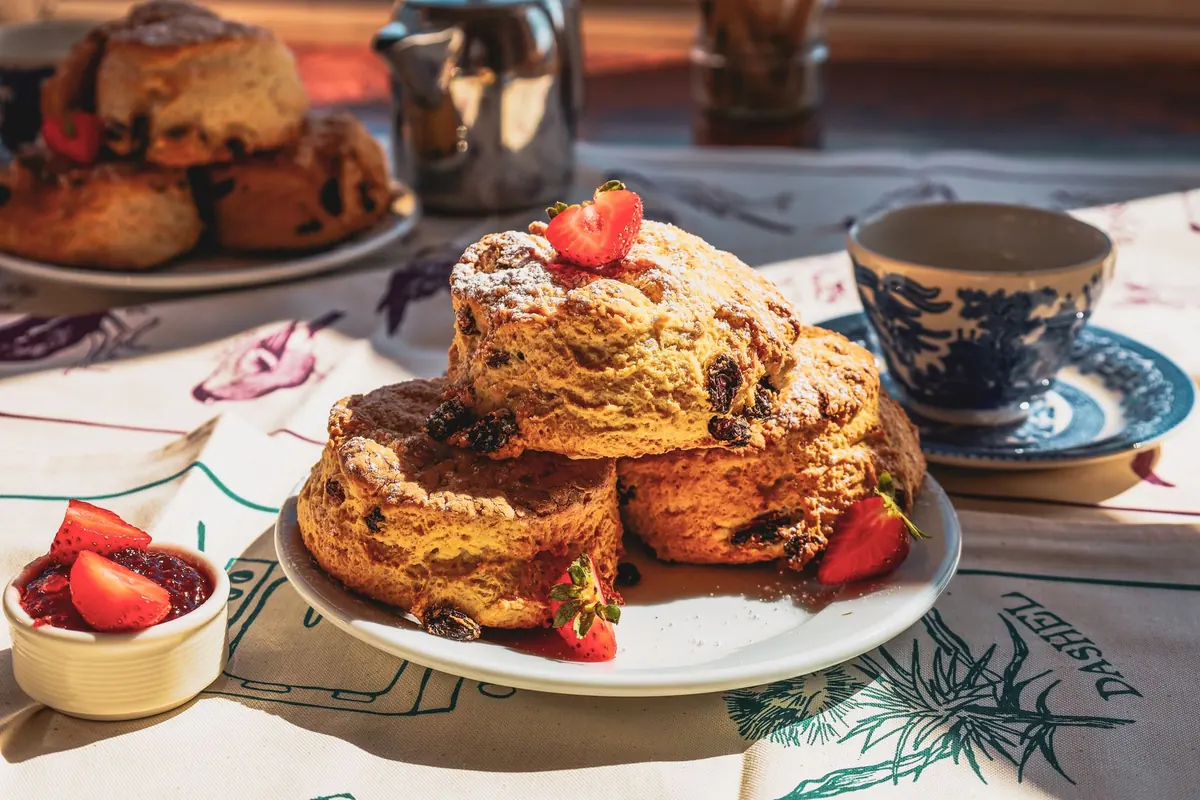
- Middle tier: scones with clotted cream and strawberry jam. Cornish tradition puts jam on first; Devon does cream first. Both are correct somewhere.
- Top tier: small cakes, fruit tarts, a slice of Battenberg or fruit cake, maybe a macaron or a chocolate ganache bite.
Strength and Milk: Why the Cups Don't Match
Here's where the two really part company. English breakfast is a heavy, milk-friendly tea built for the morning. Afternoon tea is normally poured from something lighter — Ceylon, Darjeeling, Earl Grey, or a gentler breakfast blend. The reason is the food. A strongly malted Assam with a good slug of milk flattens a cucumber sandwich and steamrolls a delicate pastry. Lighter teas stay bright, take lemon cleanly, and let you taste what you're eating.
That said, plenty of hotels serve a standard English breakfast blend all afternoon because it's what people expect. It works with the scones and the chocolate cake, less well with the salmon. If you're choosing, match the tea to the food rather than to the clock.
Pairings That Actually Work
English breakfast with buttered toast and marmalade, a bacon sandwich, porridge, a full cooked breakfast, or a wedge of mature cheddar. The malt and tannin cut richness and reset your palate between mouthfuls.
For afternoon tea, a bright Ceylon or a second-flush Darjeeling suits cucumber and smoked salmon; a light Assam handles the scones, where you want something brisk to slice through clotted cream; Earl Grey's bergamot sits well with lemon tarts and anything with berries. If chocolate is on the top tier, go back to a plain, slightly malty blend — flavoured teas fight cocoa and lose.
When Each One Turns Up
English breakfast belongs to weekday mornings, hotel buffets, early trains, breakfast meetings and the ten-minute pause before you start something difficult. It's a solo drink as often as a shared one, and nobody minds if you have it at four in the afternoon.
Afternoon tea is social and slightly ceremonial. Birthdays, baby showers, Mother's Day, hen dos, a hotel treat while travelling, Christmas outings, or a quiet Tuesday when you and a friend both want an excuse to sit down for two hours. It needs a table, a free afternoon and someone willing to do the washing up afterwards.
Which One Do You Actually Want?
If you want a hot, strong drink in five minutes, brew English breakfast. Use freshly boiled water, give it three to four minutes, add milk to taste, and stop there. If you want an occasion, plan an afternoon tea: two or three sandwiches and two small cakes per person is plenty, scones go in the oven last so they arrive warm, and make the tea fresh in small pots rather than one giant one that stews.
Hosting both? Brew a pot of English breakfast and a pot of something lighter, keep a jug of hot water on the table for topping up, and let people choose. Offer milk and lemon in separate jugs. That's the difference between the two, served side by side: one is a habit, the other is an hour of your afternoon.
Photo: arjan carja / Pexels