British rooms are rarely bought in one go. They accumulate: a chair that came from a grandparent's spare room, a print found at a village fete, a lamp that was a housewarming present nobody expected to last. That slow gathering is what gives British interiors their texture, and it is also why they are so hard to copy when you start with an empty flat and a full afternoon.
The look can be learned, though. It comes down to four things: a backdrop of muted colour, a small number of patterns chosen on purpose, a few genuinely old pieces, and modern comfort quietly doing its job. Here is how to put those together without turning your living room into a heritage display.
What People Mean by "British Style"
Strip away the chintz and the taxidermy and a fairly consistent set of ingredients appears: soft, chalky wall colours; furniture from at least three different decades; wool, linen and cotton rather than anything shiny; lamps in corners instead of one bright light overhead; and a comfortable disregard for symmetry. A Georgian chest sits beside a 1970s floor lamp and neither looks embarrassed.
The aim is a room that looks inhabited rather than curated. If a visitor cannot tell which piece you bought last week, you have got it right.
Get the Backdrop Right First
Most mistakes happen at this stage: white walls, dark floor, then panic.
British light is grey and weak for much of the year, which turns a cool white into something closer to a waiting room by January. Choose colours with warmth and a bit of mud in them — clay, sage, ochre, duck-egg blue, soft terracotta, or an off-white the colour of double cream rather than snow. Deep colours work better than people expect in small rooms. A dark green carried up over the walls, ceiling and trim can make a cramped space feel like a snug.
For floors, bare boards and one decent wool rug will do more than any amount of styling. Layer a flatweave or jute underneath a patterned wool rug where you actually sit. If you have original cornices or skirting, painting them in the same colour as the walls, in a hardwearing eggshell, is a trick that flatters old and modern rooms alike.
Pattern, Without Drifting Into a Museum
Heritage pattern is the part people get wrong. One floral spread across everything reads as a themed hotel; nothing at all reads as a rental.
- Three patterns per room is a comfortable maximum. Five is possible if two of them are quiet.
- Vary the scale. One large motif, one medium, one small and tight — a big willow print, a mid-scale check, a narrow ticking stripe.
- Give them a shared colour. If every pattern includes a little faded red or soft blue, they agree with each other even when the styles differ.
- Keep the boldest pattern low or soft. Cushions, a lampshade, curtains or an armchair are easier to live with than a whole wall — and far easier to change.
Faded and slightly worn is often better, because it lowers the volume. A crisp new print next to a genuine old one tends to make the new one shout.
Buying Antiques and Secondhand Pieces
Old furniture works best when it is doing a job. A side table for the lamp, a chest for blankets, a mirror because the hall is dark. Before you carry anything home:
- Measure the door, the stairwell and the gap where it is going. A tape measure in your pocket prevents most regrets.
- Wobble the piece gently from corner to corner. A loose joint is fixable; a cracked one less so.
- Look for woodworm: small round holes with fine dust beneath them means it is still active.
- Check drawers run, hinges hold and handles are actually attached.
- Skip anything you cannot lift with one other person, unless you have planned for delivery.
Do not theme. Buy one good Georgian or Victorian piece and let it sit among flat-pack and mid-century. A single old piece reads as confidence; a room full of dark mahogany reads as a furniture warehouse. If you inherit something heavy and orange, a coat of chalky eggshell will settle it in.
Where the Modern Comfort Goes
Comfort is what stops heritage decorating from feeling like a house you are not allowed to touch. Modern furniture earns its place by being deep, soft and quiet.
Light in layers: a floor lamp, a table lamp and something smaller on a shelf, all on warm bulbs rather than cold white, will give you more atmosphere than any ceiling fitting. If you are stuck with downlights, put them on a dimmer and treat them as task lighting only.
Then allow one deliberately modern element — a clean-lined sofa in plain wool or linen, simple shades, flat-pack shelving painted to match the walls. Storage baskets, a rug thick enough to sit on, lined curtains that keep the draught out: nobody notices these things, and everybody feels them.
Let the old pieces and the new ones disagree a little. A room should sound like a conversation, not a statement.
The Order to Do It In
- Empty the room as far as you can and work out how you actually use it.
- Choose the wall colour and floor covering. Nothing else looks right until this is settled.
- Place the biggest pieces first — sofa, bed, main table. Everything else fits around them.
- Add one large pattern, then stop and look at it for a day.
- Layer in three light sources at different heights.
- Bring in antiques one at a time, in use rather than on display.
- Live with it for two weeks before buying anything else.
Start With a Corner, Not the Whole House
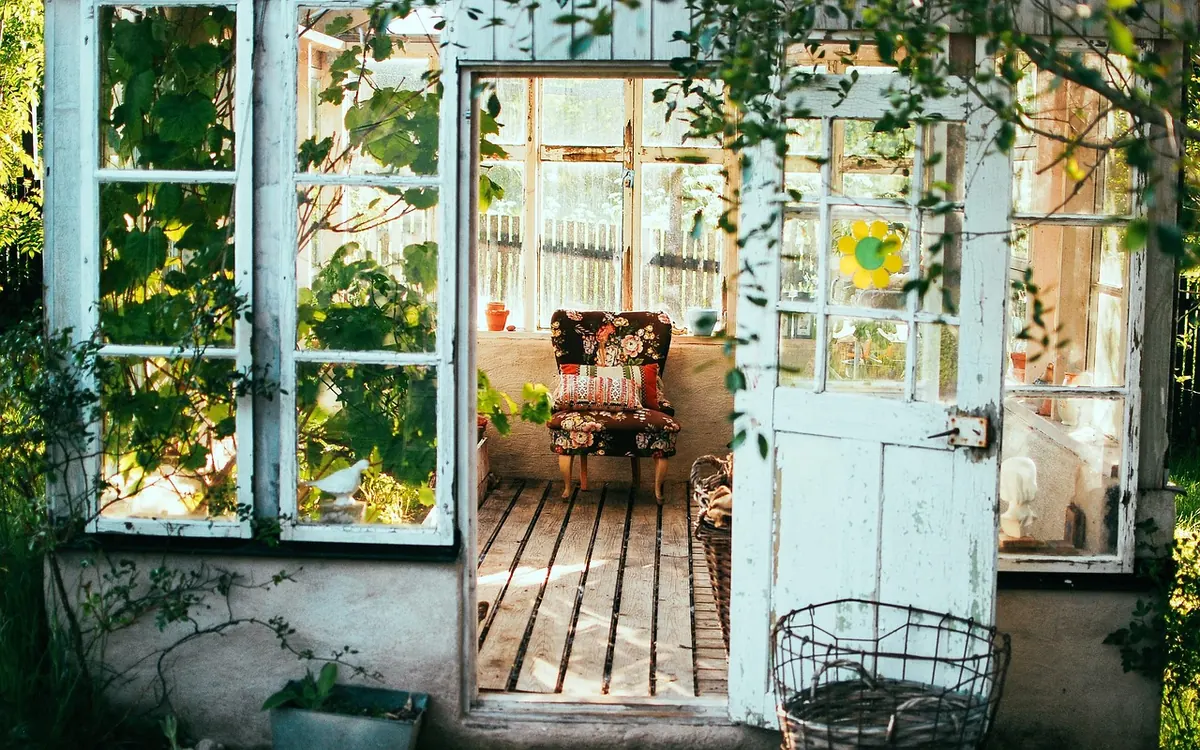
The reliable way in is to perfect one corner this weekend. An armchair, a small table, a lamp, a cushion in a bold print and a picture hung at eye level will teach you more about your own taste than a year of browsing.
Keep a note on your phone with the paint colour name, your room measurements and the rug size you need. It stops you buying the wrong thing at a fair, and it stops you buying a fourth lamp you have nowhere to plug in.
Above all, buy slowly. A room assembled over two years, mostly from things you found rather than things you ordered, will always look better than one bought in a single weekend. Heritage is not a style you install. It is what is left when you have kept the good things and used them.
Photo: Phil Ledwith / Pexels